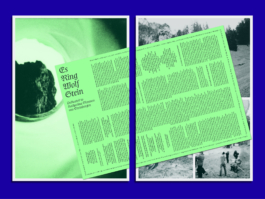
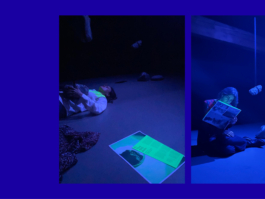
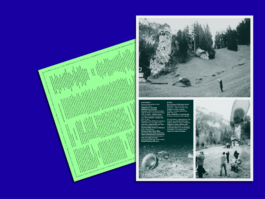
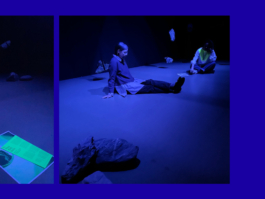
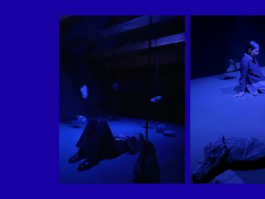
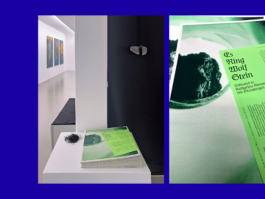
composition, 4-channel sound installation, 2-part riso poster
Aio Frei – Es Ring Wolf Stein – Dedicated to Katharina Simmen von Steinbergen
with Lucy Railton, Suza Husse, Yara Dulac Gisler, Martian M. Mächler, Tristan Amor Rabit, Corsin Danioth & Alexandra Holenstein (Queerpoint Uri), Nikki Buzzi and a poem by CAConrad
15.03. – 10.5.2026
Haus für Kunst Uri
Opening: 14.03.2026, 5pm
Curated by: Gioia Dal Molin
***
«Es winkt, Es raunt, Es donnert.»
Edouard Renner – Goldener Ring über Uri – Zürich, 1941.
«I must go to the standing stones,
to mourn in my own way.»
Brooke Palmieri, Bargain Witch – Essays in Self-Initiation, Dopamine/Semiotext(e), 2025.
«Cut a door in the wolf
so we can retrieve our dead
for a world that matters.»
CAConrad, Camisado, Spells: 21-Century Occult Poetry, Silver Press, 2025.
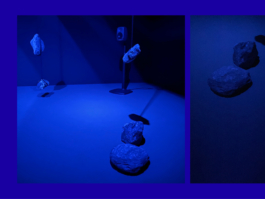
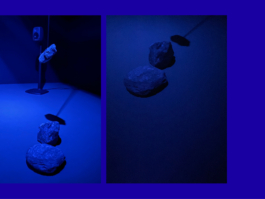
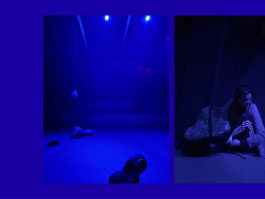
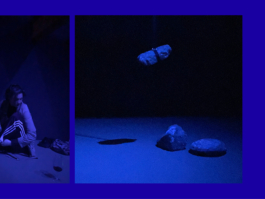
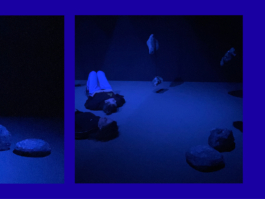
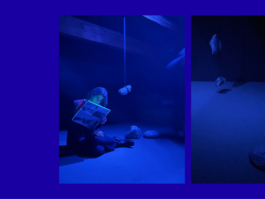
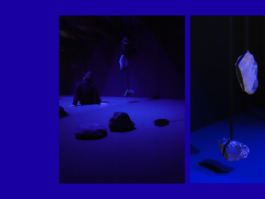
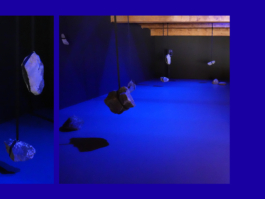
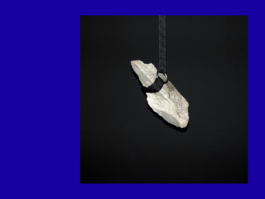
In «Es Ring Wolf Stein», Aio Frei weaves a site-specific research project into a collaborative four-channel sound installation for the Haus für Kunst Uri. The point of departure is a magical worldview formative for the region of Uri, which functions as a poetic notation figure (Es / Ring / Frevel). The work engages with the witch persecutions in the canton of Uri, connects to pre-christian ritual forms of knowledge as well as queer, healing, and communal practices, and operates with an understanding of non-linear temporality. Stone beings and other non-human entities are core agents in the composition.
The work brings together multiple temporal layers, sites of memory and socialities: collectively spoken curses and banishing spells recorded with queer youth (Queerpoint Uri) and artists connected to Central Switzerland in the Riedertal chapel; interpretations of the Schächentaler Betruf and wolf tones by the cellist Lucy Railton; chants at Myttenmätteli, field recordings at the gallows in Hospental, stone witnesses from the Steinbergen near the Furka Pass, as well as a poem spoken by CAConrad.
«Es Ring Wolf Stein» is dedicated to Katharina Simmen von Steinbergen, the first person recorded by name who was accused of witchcraft in the canton of Uri around 1450 and sentenced to death in Hospental. The dedication understands itself as a situated and at the same time relationally extended political act of remembrance—of dissident ways of living and resistant forms of knowledge that continue in sound, stone, and collective practices of becoming aware.
«I want to lay claim to the dark power of my monstrous identity without using it as a weapon against others or being wounded by it myself. I will say this as bluntly as I know how: I am trans, and therefore I am a monster. Just as the words «dyke», «fag», «queer», «slut» and «whore» have been reclaimed, respectively, by lesbians and gay men, by anti-assimilationist sexual minorities, by women who pursue erotic pleasure, and by sex industry workers, words like «creature», «monster» and «unnatural» need to be reclaimed by the transcommunity. By embracing and accepting them, even piling one on top of another, we may dispel their ability to harm us. A creature, aft er all, in the dominant tradition of Western European culture, is nothing other than a created being, a made thing. The affront you humans take at being called a «creature» results from the threat the term poses to your status as «lords of creation», beings elevated above mere material existence. As in the case of being called «it», being called a «creature» suggests the lack or loss of a superior personhood. I find no shame, however, in acknowledging my egalitarian relationship with non-human material Being; everything emerges from the same matrix of possibilities. «Monster» is derived from the Latin noun monstrum, «divine portent», it-self formed on the root of the verb monere, «to warn». It came to refer to living things of anomalous shape or structure, or to fabulous creatures who were composed of strikingly incongruous parts, because the ancients considered the appearance of such beings to be a sign of some impending supernatural event. Monsters, functioned as messengers and heralds of the extraordinary. They served to announce impending revelation, saying, in effect, «Pay attention; something of profound importance is happening.» Susan Stryker, My Words to Victor Frankenstein above the Village of Chamounix – Performing Transgender Rage in: When Monsters Speak: A Susan Stryker Reader, Duke University Press, 2024.
***
KOMPOSITION:
Konzept & Komposition: Aio Frei
Cello: Lucy Railton
Sprechstimme 1: Suza Husse
Sprechstimme 2: CAConrad
Fluchzauber, Gedicht & Texte: Suza Husse – möge die steinin, 2025; Aio Frei, Es möge, 2025; CAConrad – Camisado, Spells: 21-Century Occult Poetry,Silver Press, 2025; Edouard Renner – Goldener Ring über Uri, 1941.
Fluchzauber codiert & Gesänge: Yara Dulac Gisler, Martian M. Maechler, Tristan Amor Rabit, Corsin Danioth, Suza Husse, Alexandra Holenstein, Aio Frei
Recordings Gruppe Riedertal: Nikki Buzzi
Fieldrecordings: Aio Frei
Aufnahmen Steine, Orte & Wesen: Jützsteine Erstfeld, Nidelgretstein, Steinbergen, Vierschröt Riedertal, Myttenmätteli/Chindlistein Riedertal, Fuchs Hospental, Vögel beim Galgen Hospental
Technische Unterstützung: Fabian Gutscher
Mixing/Mastering: Nikki Buzzi
POSTER:
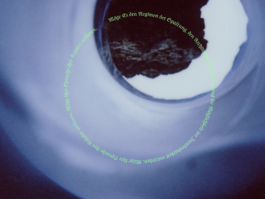
Text, Gestaltung & Risodruck: Aio Frei
Fluchzauber: Aio Frei, Es möge, 2025; Suza Husse – möge die steinin, 2025.
Gedicht: CA Conrad, Camisado, Spells – 21Century Occult Poetry, Silver Press, 2025
Font: «Handwerk» von Out of the dark
Spezieller Dank an: Gioia Dal Molin, Haus für Kunst Uri, Corsin Danioth & Queerpoint Uri, Christina Caprez, Suza Husse, Nikki Buzzi, Fabian Gutscher, Carla Arnold vom Staatsarchiv Uri, Paul Jans, Walter Sigi Arnold, Anton Arnold-Kämpf, Kulturbüro Zürich, Franziska Koch, Magnus-WG und all den Steinen.
Photos Exhibition Views: Romy Rüegger, Shehrazade Mahassini, Franziska Koch, Ursula Vogel